Measure the package as it will travel
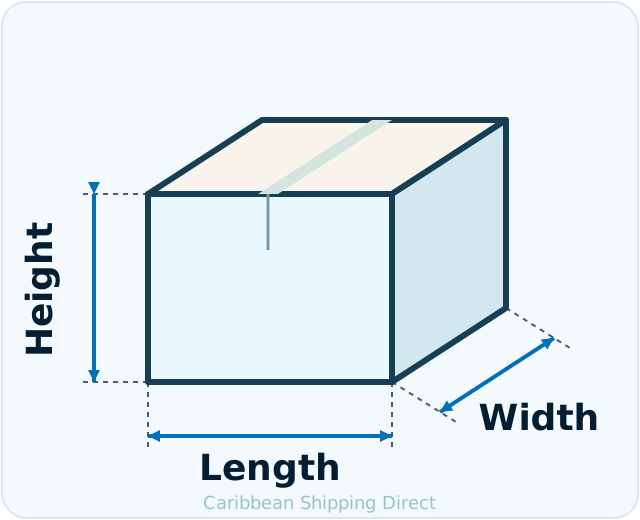
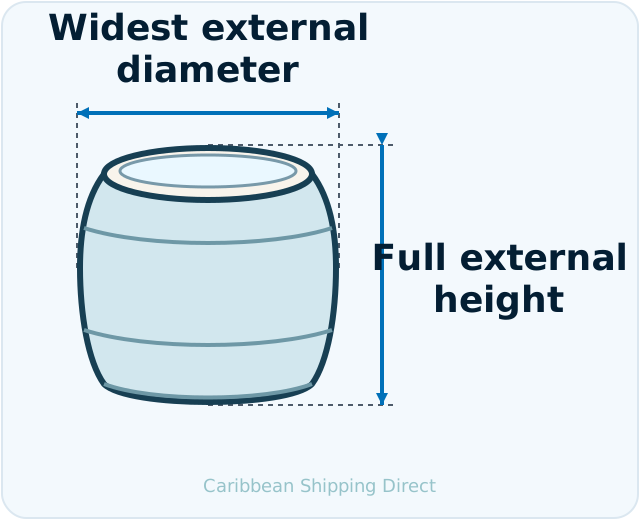
Take measurements after the barrel, drum or box is packed and closed. Use the widest and tallest external points, including lids, handles and packaging that changes the final size.
- For a box, record length, width and height.
- For a round barrel or drum, record the widest diameter and full external height.
- Keep one unit of measurement throughout the list.
Keep different sizes on separate lines
Group packages only when their type and external size match. A second barrel size or a different box shape needs its own line, even when the contents are similar.
- Name the package type in plain language.
- Add the quantity for that exact size.
- Use the calculator's custom-package option for another shape.
Add a sensible packed-weight estimate
For a barrel or box, packed weight, also called gross weight, is the total weight of the contents, the barrel or box and the packing materials around them.
For illustration only: 18 kg of contents + 2 kg for the box and packing materials = 20 kg packed weight. These are example figures, not a standard package weight or a weight limit.
If you weigh the closed, packed barrel or box, the reading already includes its packaging. Record that total; do not add the barrel, box or packing weight again.
Record the packed weight when you can do so safely. If it is only an estimate, say so rather than giving a precise figure you cannot support.
- Include the container and packing material in the estimate.
- Flag anything that may need two people or lifting support.
- Do not risk injury to obtain a weight.
Describe what handling may involve
A short contents description is more useful than a long inventory at this stage. Mention fragile contents, awkward shapes, stacking limits and any access issue that may affect collection.
- Keep restricted or uncertain contents visible in the notes.
- Mention stairs, lifts or a long carry where relevant.
- Do not put identity or payment information in the description.
Use the calculator as a planning aid
The barrel and box calculator combines the external package volumes you enter. Its result helps you describe the shipment, but it is not a price, usable loading capacity, cargo acceptance or a space reservation.
- Check every line before saving the result.
- Keep the package list with your enquiry details.
- Wait for the complete route and cargo check before making arrangements.
Carry one clear list into the enquiry
Send the quantities, measurements, estimated weights and handling notes together. The team can then see what is known, what is estimated and what still needs to be checked for the route.
If measurements change, remeasure the closed, packed items. Correct the same package lines and units, including quantities and packed weights.
If you used the calculator, enter the new values and choose ‘Save and continue to route enquiry’ again.
- Saving a calculation does not update an enquiry you have already sent.
- Send the revised list with your enquiry or quotation reference, if you have one.
- Ask us to recheck any quotation against the new details before relying on it.